Spring has always been a somewhat “contradictory” season for me.
On one hand, it feels incredibly romantic. The weather gets warmer, the light becomes softer, flowers start appearing on the streets, and even getting dressed naturally feels lighter and more effortless. But on the other hand, spring is also the easiest season to end up with messy outfits—because of fluctuating temperatures, layering complexity, and unpredictable weather, it’s very easy for an outfit to look bulky or visually chaotic.
The moment I truly started making my spring outfits look consistent and polished was when I began paying serious attention to one item: the base layer top.
I used to think base layers were just “supporting pieces,” something you wear underneath to fill space. But over the past two years, I’ve slowly realized something important:
They actually define the foundation of your entire outfit—texture, color tone, fit, and even overall vibe all start from here.
1. Why I Became Increasingly Dependent on Base Layer Tops in Sprin
To be honest, I didn’t always care about base layers.
Back then, I focused more on coats, skirts, and shoes—those “visible” statement pieces. I assumed people notice the outer layer, not what’s underneath. But through taking photos, going out, and documenting daily life, I started noticing something very real:
A good outfit is rarely defined by complexity on the outside, but by stability underneath.
This becomes especially obvious in spring. Temperature changes throughout the day are huge—I often go through a cycle of wearing a jacket, taking it off, then putting it back on again. If the base layer doesn’t look good on its own, the entire outfit feels unstable.
Gradually, I started focusing on three things when choosing base layers:
- Whether it fits close to the body without being tight
- Whether the color feels soft and not overly eye-catching
- Whether it works even when worn alone
Once a base layer can switch effortlessly between “standalone piece” and “inner layer,” it becomes truly valuable.
2. A Small Detail About Spring Color Choices: Why I Avoid High-Saturation Tones Now
This is one of the biggest changes in my style over the past two years.
I used to love wearing bright spring colors—lemon yellow, hot pink, vivid green. They look great in photos, but in real life I slowly realized two issues:
First, they often feel a bit “too much” in everyday settings.
Second, and more surprisingly, they tend to attract small insects more easily.
I remember one time I wore a bright yellow base layer while shooting in a park, and I was literally surrounded by small flying insects. That experience stayed with me.
Since then, I’ve almost completely stopped choosing high-saturation inner layers.
Now I prefer:
- Ivory white
- Oat beige
- Soft grey
- Dusty blue
- Light coffee tones
这些颜色并不刻意追求醒目,而是让整体造型显得更加简洁精致。这种差异在照片中尤为明显——它们更耐看,也更协调统一。
3. My Three Go-To Base Layer Outfit Methods
In my wardrobe, I don’t actually own many base layers—but I always follow one rule: fewer pieces, but each one must serve a clear purpose.
Spring is especially challenging because the weather changes constantly. Mornings can feel cool, afternoons warm, and evenings slightly chilly again. In this context, base layers aren’t just styling tools—they’re temperature regulators.
Right now, I rely on three different base layer tops to cover my entire spring wardrobe needs, each with a very specific role.
① Minimal Solo Look
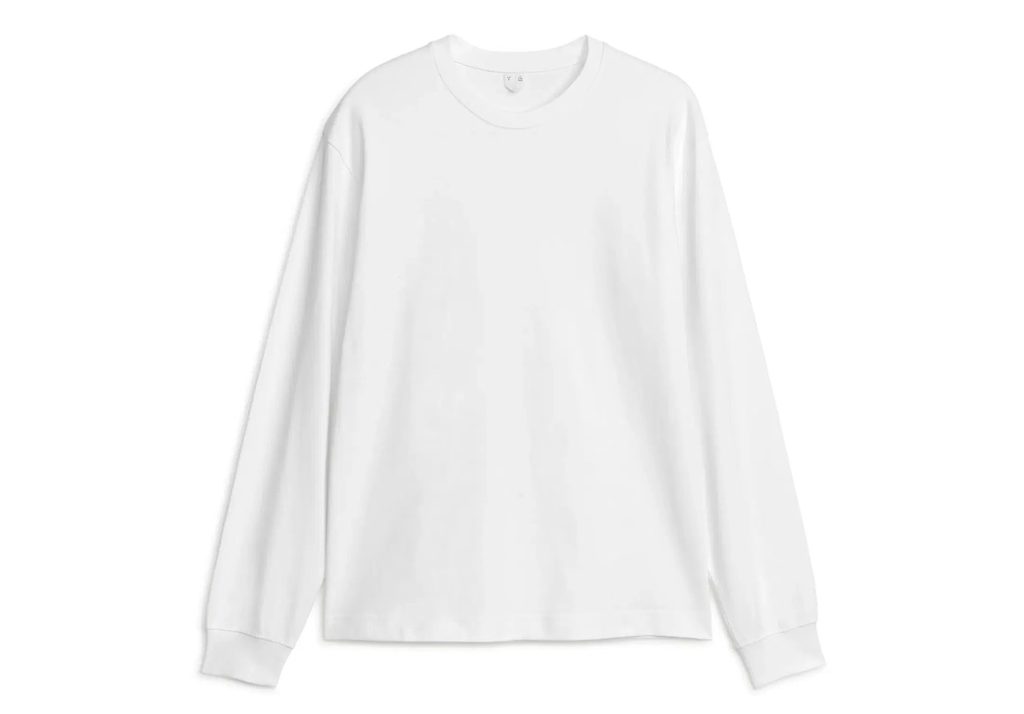
ARKET Organic Cotton Long Sleeve Top
This is my most stable spring basic and also the one I wear the most.
It has a slightly fitted but not tight silhouette, and the fabric drapes naturally. When worn alone, it never feels thin or cheap.
During spring’s unpredictable temperature shifts, this piece is incredibly reliable. In the morning when it’s still a bit chilly, it works perfectly on its own. When temperatures rise at midday, it remains breathable and comfortable. And if I need to add a light jacket like denim or a trench coat, it still maintains clean proportions.
Most of the time, I simply wear it with straight-leg jeans or tailored trousers. The overall result is minimal, clean, and very stable visually.
Best for: commuting / cafés / everyday city wear
Style keywords: minimal, clean, light French aesthetic
Experience: extremely stable for spring temperature changes
Strength: a fail-proof essential with elevated simplicity
② Office Layering Look
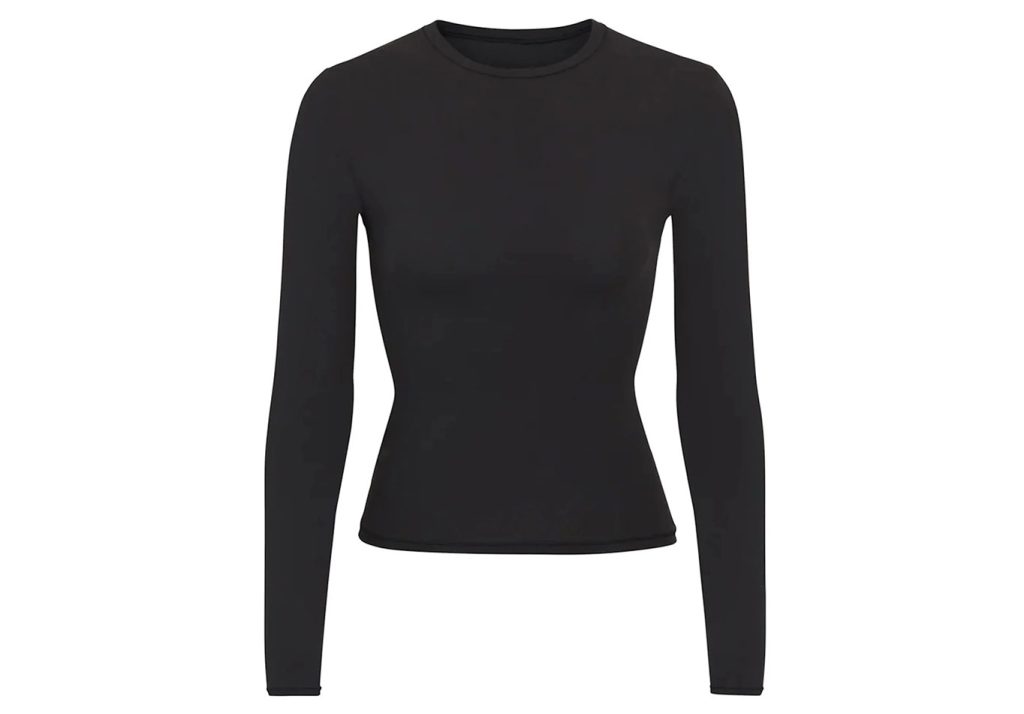
SKIMS Fits Everyone Long Sleeve Top
This is my core layering piece, especially during those “cold in the morning, warm in the afternoon” spring days.
The fabric is soft and close-fitting, gently hugging the body without feeling restrictive. I usually wear it as the first layer, with a blazer or trench coat on top.
In the morning, it keeps me warm enough. In the afternoon, when I remove the outer layer, the outfit still looks complete and intentional rather than unfinished.
When I shoot workwear content, this piece is also essential. It creates a clear structure contrast—structured outerwear paired with a soft inner layer—which instantly makes the outfit look more refined and clean.
Best for: commuting / city workdays / light business settings
Style keywords: sharp, slimming, structured
Experience: perfect for fluctuating spring temperatures
Strength: strong layering stability and elevated texture
③ Relaxed Casual Look
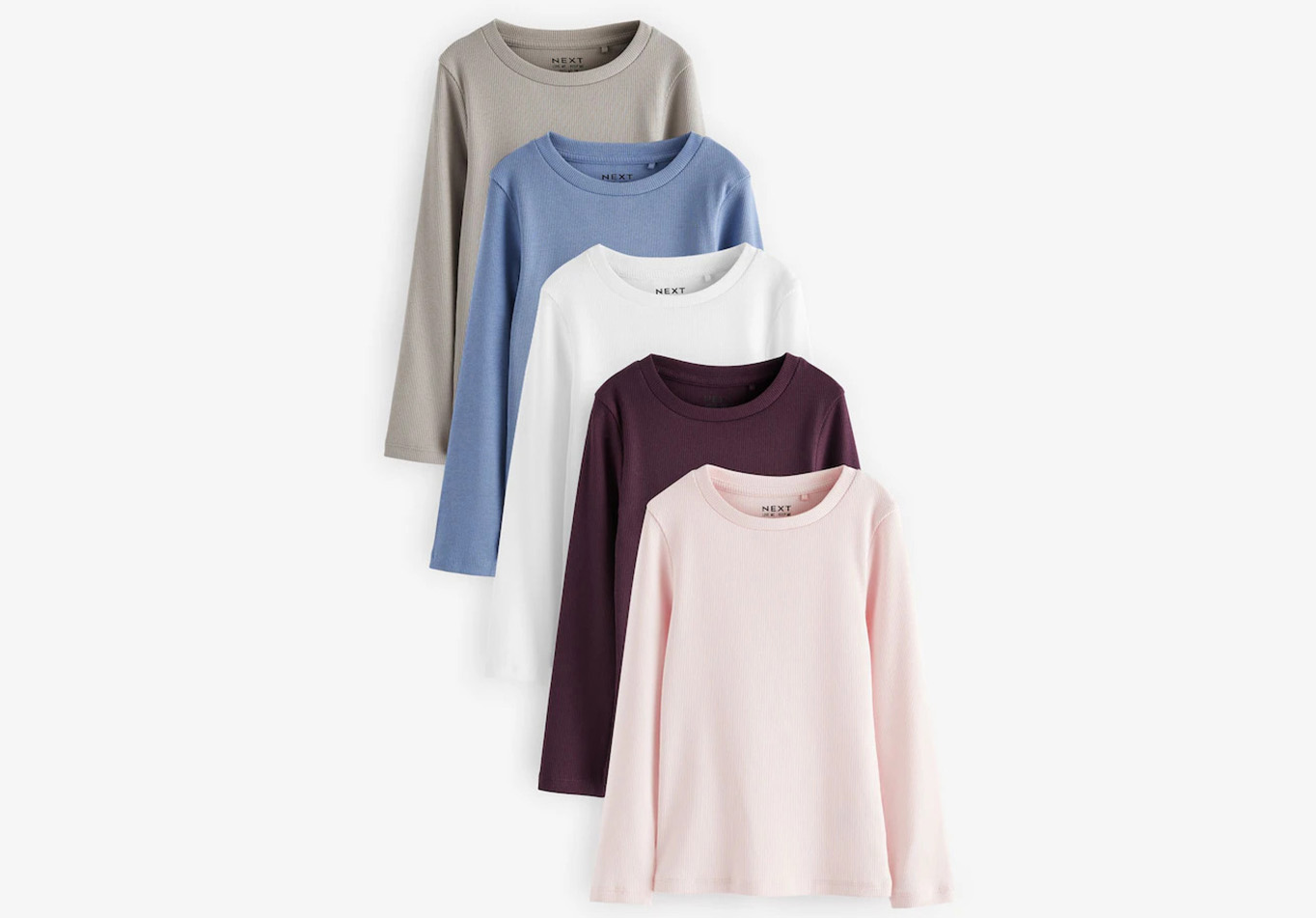
Next Cotton Long Sleeve Top
This is my most relaxed base layer, designed for everyday comfort rather than structure.
It has a slightly loose fit and minimal design details, which makes it perfect for spring’s more casual moments.
Spring often creates a split in lifestyle: weekdays require structure, while weekends feel more relaxed. This piece fits perfectly into that second category.
On days when the weather is unstable—slightly windy but not cold—it feels breathable and effortless. I often wear it for coffee runs, walks, or quick errands. It doesn’t feel styled, but it also doesn’t look careless.
I usually pair it with wide-leg trousers or joggers to enhance the relaxed silhouette.
Best for: weekends / casual outings / relaxed daily wear
Style keywords: effortless, natural, comfortable
Experience: ideal for low-pressure spring days
Strength: the easiest, most comfortable everyday essential
4. Why Inner Layer Stability Matters More Than Individual Pieces
Over time, I’ve realized something important:
Many people focus too much on “statement pieces” while ignoring structure.
But whether an outfit looks good or not is not determined by a single item—it’s determined by overall stability. And base layers are the foundation of that structure.
When the inner layer is clean and simple:
- Outerwear becomes more flexible
- Accessories feel more intentional
- The overall outfit becomes more unified
That’s also why I’ve gradually reduced complexity and returned to basics.
5. My Criteria for Choosing Base Layers
After years of trial and error, I now only consider three things:
- Whether it can be worn alone
- Whether the color is soft and balanced
- Whether it can integrate into multiple outfit styles
品牌不再是首要考虑因素。有时候,最普通的衣服反而是我穿得最多的。
6. Shopping Channels I Personally Use
For base layers, I mainly shop on a few UK-based platforms:
- ASOS (great for basics and multiple brands)
- Net-a-Porter (best for premium quality pieces)
- Next (ideal for affordable everyday essentials)
What I value most about these platforms is not price, but:
- Easy returns
- Reliable sizing systems
- Consistent style direction
For me, that matters far more than anything else.
British fashion e-commerce platforms offer an incredibly diverse range of choices—from fast fashion to high-end designer labels, from department stores to niche brands. No matter your style or budget, there is always something suitable.
For me, the real value of these platforms goes beyond shopping. They help me observe seasonal trends quickly and continuously provide inspiration for content creation.
If you approach them strategically—using fast fashion for trend capture and designer platforms for quality elevation—you can build a wardrobe (and a content style) that feels layered, intentional, and consistently evolving.