
For many people who are just starting to learn about personal finance, investing often means searching for the “best product” or the “highest return.” However, before making any investment decisions, there is a more fundamental question that deserves attention: how should your money be organized and allocated properly?
Many people prefer to keep all their money in bank accounts because they believe it is the safest option. Others place a large portion of their wealth into a single investment because they want higher returns. However, both approaches may create potential problems. Keeping everything in cash may make it difficult to protect purchasing power against long-term inflation, while concentrating too much money in one investment can expose investors to unnecessary risks.
This is why asset allocation is so important. Simply put, asset allocation means distributing your money among different types of assets based on your financial goals, risk tolerance, and investment timeline. By combining different assets, investors can create a better balance between risk, potential returns, and financial flexibility.
1. What Is Asset Allocation and Why Does It Matter?
Asset allocation does not mean buying as many investment products as possible, nor does it mean simply dividing your money into equal parts. Instead, it focuses on the role that each asset plays within an overall investment strategy.
For example:
Cash provides stability and liquidity, making it useful for daily expenses, emergency funds, and short-term financial goals. Stocks generally offer stronger long-term growth potential but also come with greater price fluctuations. Bonds usually provide more stable returns and can help reduce overall portfolio volatility.
A well-designed asset allocation strategy mainly serves three important purposes:
Reducing investment risk
Financial markets do not always move as expected. One type of asset may perform well during a certain period but experience losses when economic conditions change. Holding different types of assets can reduce the impact of a single market decline on overall wealth.
Supporting long-term wealth growth
Asset allocation is not designed to achieve quick profits. Instead, it focuses on allowing money to grow steadily over time while maintaining a reasonable level of risk.
Maintaining financial flexibility
Different financial goals require different approaches. Money needed for short-term expenses may not be suitable for highly volatile investments, while long-term funds may have more opportunities to focus on growth-oriented assets.
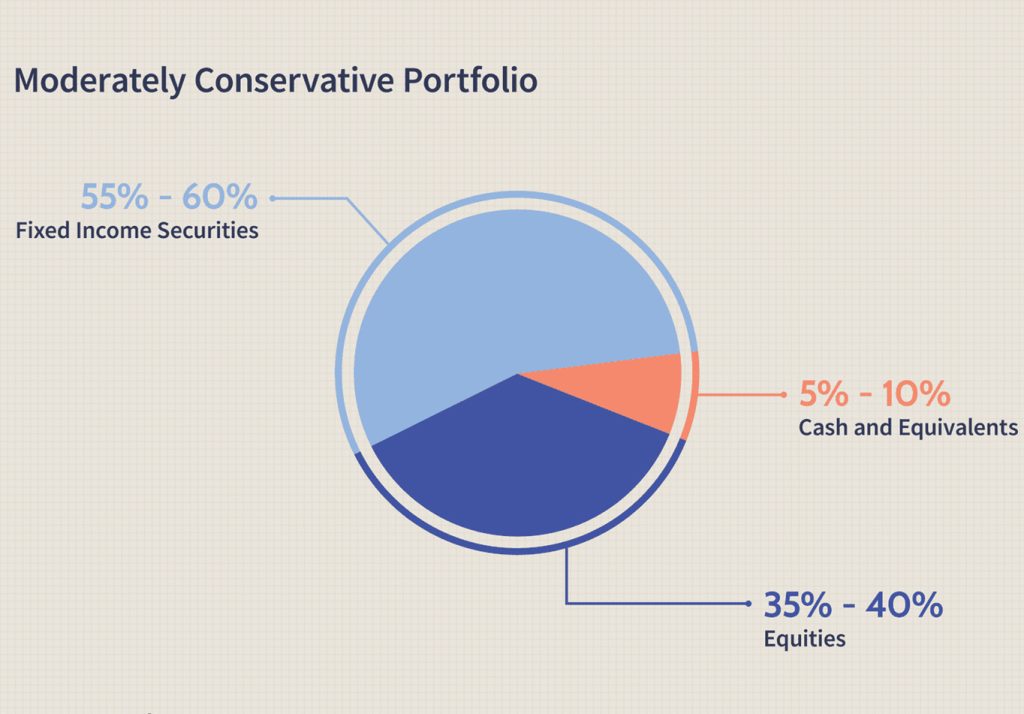
2. Common Asset Classes and Their Roles
Understanding different asset categories is the first step toward building an appropriate asset allocation strategy.
Cash and Savings
Cash is one of the easiest assets to understand, including bank deposits, money market funds, and similar options.
Its biggest advantages are security and liquidity. Whether you need money for everyday spending, unexpected expenses, or short-term goals, cash provides convenient access.
However, cash also has a clear limitation: over long periods, inflation can reduce its real purchasing power. If prices continue rising, relying entirely on savings may make it difficult to achieve meaningful wealth growth.
For this reason, cash is usually better used as a financial foundation rather than the only form of wealth management.
Stocks
Stocks are an important part of many investment portfolios.
Compared with other asset classes, stocks generally provide stronger long-term growth potential. Business development, economic expansion, and innovation can all contribute to increasing stock values.
However, stock markets can also experience significant volatility. Prices may change due to economic conditions, company performance, and investor sentiment.
Therefore, stocks are usually more suitable for investors with long-term goals who can accept short-term market fluctuations.
Bonds
Bonds are generally considered a relatively stable investment asset.
Compared with stocks, bonds typically experience lower price volatility and can provide a more predictable income source. Within an investment portfolio, bonds are often used to balance risk and create a more stable overall structure.
For investors who want to reduce the impact of market fluctuations, including bonds in an allocation strategy may provide additional stability.
Real Estate and Other Assets
Beyond traditional assets such as cash, stocks, and bonds, some investors also consider real estate, gold, or other alternative assets.
These assets may provide additional diversification benefits, but they also involve factors such as liquidity, investment costs, and individual financial circumstances.
The goal of asset allocation is not to own as many different assets as possible, but to create a combination that matches your personal needs.
3. How Should Asset Allocation Change at Different Life Stages?
Asset allocation is not a permanent decision. As your age, income, family situation, and financial goals change, your investment strategy may also need adjustments.
Young Investors: Focus on Long-Term Growth
Young investors usually have a longer investment horizon, which allows them to tolerate a certain level of market volatility.
At this stage, the focus is often on using time as an advantage and building wealth through long-term investing rather than reacting to short-term market movements.
Middle-Aged Investors: Balance Growth and Stability
As family responsibilities increase, financial priorities often change.
Factors such as buying a home, supporting children’s education, and managing household expenses can influence how money should be allocated. During this stage, many investors need to find a balance between growing wealth and controlling risk.
Investors Approaching Retirement: Protect Existing Wealth
As retirement gets closer, protecting accumulated wealth often becomes increasingly important.
Instead of focusing only on high growth, many investors begin prioritizing stability and reducing the potential impact of major market declines on future financial security.
4. Recommended Tool: Vanguard Portfolio Builder
For beginners, the biggest challenge with asset allocation is often not understanding the concept, but knowing where to start.
In this situation, asset allocation tools can provide useful guidance. For example, tools such as Vanguard Portfolio Builder can help users explore different portfolio structures based on their goals, risk preferences, and investment timelines.
Its advantages include:
Helping users create an investment framework
By answering basic questions, users can better understand their risk tolerance and consider how their money could be distributed among different asset categories.
Providing portfolio analysis ideas
These tools can help investors understand how different allocations may affect their investment experience. For example, increasing stock exposure may create greater growth opportunities but also lead to larger price fluctuations.
Supporting long-term planning
Asset allocation is not something that should be decided once and ignored forever. As personal circumstances change, investment plans may need regular review and adjustment. Planning tools can help investors reconsider whether their current strategy still matches their goals.
For people without professional investment experience, these tools cannot replace professional financial advice. However, they can help users develop a clearer understanding of money management and portfolio planning.

5. Common Asset Allocation Mistakes
Even after understanding the importance of asset allocation, many people still make mistakes when managing their investments.
Focusing only on returns while ignoring risk
An asset that performed well in the past does not necessarily guarantee future success. Looking only at returns may cause investors to underestimate potential risks.
Changing investments too frequently
Short-term market movements can easily influence emotions. Frequent buying and selling may increase costs and cause investors to move away from their original long-term strategy.
Ignoring personal financial circumstances
Everyone has different income levels, family responsibilities, risk tolerance, and financial goals. Therefore, there is no single asset allocation strategy that works for everyone.
A suitable allocation approach should always be built around personal circumstances.
Looking at Wealth Management from a Long-Term Perspective
Asset allocation is not a method for becoming wealthy overnight. Instead, it is a structured approach to managing money over time.
By understanding different asset types, distributing funds according to personal goals, and regularly reviewing financial plans, ordinary investors can gradually build a more stable financial foundation.
For beginners learning about investing, the most important first step is not searching for the “best investment product,” but developing the right asset allocation mindset.
If you want to learn more about investment tools and portfolio strategies, financial platforms and educational resources from investment organizations can provide additional guidance. Choosing suitable tools and building a long-term plan is often more valuable than constantly reacting to short-term market changes.